Showing posts with label Malta. Show all posts

Wednesday, 25 April 2012

Malta's History


Malta’s history has enough to keep a person occupied for weeks. Although my reasons for this trip centered on getting some sun and getting the hell out of England for a week, I would love to go back to visit some of the more cultural sites. I couldn’t begin to describe the history of this tiny nation in one article, so instead I’ll quickly gloss over some of the highlights to explain why I need to go back.

For starters, Malta is a Roman Catholic nation, a fact that is typically attributed to St. Paul’s shipwreck on the island in the first century.

All things considered, it's not the worst place to shipwreck

Most statistics list the population as being over 95% Catholic, and churches dominate the landscape. There are 365 churches on the island, with the standing joke being that there’s one for each day of the year.

Another fun fact is that many churches have two clocks on their towers. Only one of the clocks shows the correct time. Superstition holds that two clocks would confuse the devil, and he would never know what time Mass was performed. By all accounts, this was an effective ploy. However, he succeeded in getting divorce legalized last year, so perhaps they should have put the clocks outside Parliament instead.

Churches, like most of the buildings on Malta, are made primarily of limestone. For centuries limestone was the only building material available, but it remains the most popular choice today. It’s durable, cuts easily, and helps maintain comfortable household temperatures all year long. If you’re really excited about limestone, you can even visit the Limestone Heritage Museum in Siggiewi. Although I can’t say I find it all that thrilling, I will say that the contrast of white limestone with dark rocky beaches and cactus lined streets is gorgeous in the sun.

The arrival of the Knights of St. John furthered Catholicism on Malta. The island’s strategic location allowed the Knights to maintain and protect the crusader territory while amassing their wealth. They were led by a Grand Master, who reported to the Pope. When referring to historical events, most tours will reference who the Grand Master was at the time, similar to England mentioning who was King or Queen or the States referencing a presidency. 

Before they excelled in military conquests, the Knights were an order devoted to medical services in Jerusalem. In 1643, Grand Master Jean Paul Lascaris continued this tradition by building the Lazaretto, or quarantine hospital, on Manoel Island to protect the population against plague and cholera.

The Lazaretto

For over 250 years, every visitor passed through this hospital before entering the country. Some famous visitors include Sir Walter Scott, Lord Byron, and Cardinal Newman. The Lazaretto was damaged during World War II and fell into disrepair, but is now being restored.

The island of Malta benefitted from the Knights’ protection for over 200 years, until corruption turned the local public against them. Napoleon’s arrival in 1798 signaled the end of the Knights’ Maltese history.
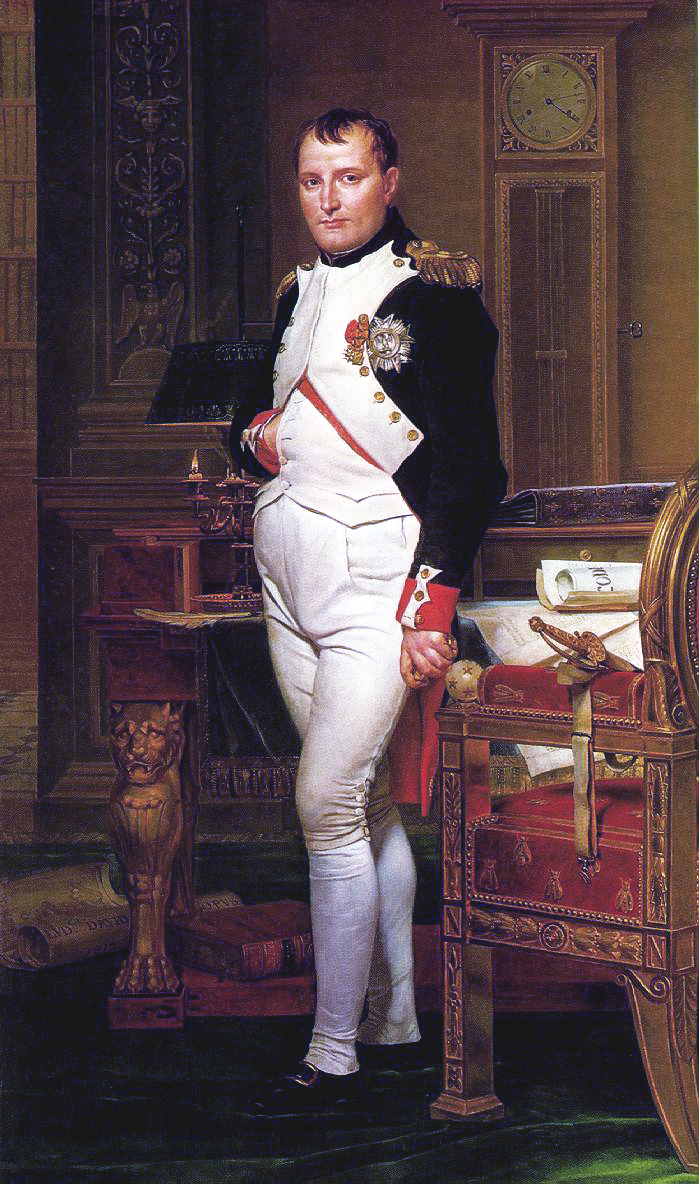
He looks trustworthy...

The French occupation of Malta only lasted two years, until the British arrived to save them. It didn’t take long for Britain to notice the quality of Malta’s harbors, so they decided to “save” them for the next 164 years. The island became a pivotal location for the British naval fleet, and became even more beneficial after the Suez Canal opened in 1869.

Malta gained its independence from Britain and is now part of the European Union. They recently switched to the euro, and the “One Lira Store” now sells everything for two euro. The island continues to be a useful seaport, and just last summer thousands of evacuees fled Libya to find a safe haven on Malta’s shores. Everything from cruise ships to fishing vessels have a place to dock in Malta’s extensive harbor system. It seems that no matter where you stand in Malta, you can see either a boat or a church, usually at the same time. So if lounging on the beach isn’t your style, there’s plenty of history to keep you occupied.

Sunday, 22 April 2012

Wining and Dining in Malta


Before I went to Malta, I was warned that British food is quite popular there and not to get my hopes up. Although I enjoy British food, they’re not exactly known for their wild flavors. I went in with low expectations, but I was pleasantly surprised by Malta’s dining options. To be fair, there were several restaurants that looked phenomenal, but we were in the mood for laid-back meals on the beach and couldn’t be bothered to dress for fine dining. Sometimes a girl just needs nachos.

The first place I’d recommend is Surfside Bar and Grill in Sliema. It’s a typical sports bar, but it’s spread over several levels, offering terraced views and comfy sun loungers right on the beach. They offer a sports-themed menu, reasonable prices, and friendly staff. We split a calamari appetizer and a pizza for two but we could have easily shared a single’s pizza, as the portions were enormous. We topped it off by ordering fruity drinks complete with umbrellas, and getting our first sunburns of the trip.

The next place we really enjoyed was Mr. Fitz Restaurant in Marsaxlokk. After browsing the drinks menu, my adventure partner noticed that a “full” measure of wine was 5 euro. Confused, he asked what a “full” meant. The waiter clearly thought we were idiots and explained that it’s a full bottle. With prices like that, we knew we’d found love. I once again had the calamari, but my adventure partner went for a full squid. It was delicious, perfectly cooked on a bed of seasoned rice. You can’t help but appreciate the freshness of the seafood as you sit a mere 3 feet away from the water.

It wouldn't be an adventure if we didn't order an entire animal...

Our favorite place by far was Grand Slam Chilidogs in Mellieha. Their advertisement was spot on; I was in hot dog heaven!  Yes, we flew all the way to Malta and ate chili dogs two nights in a row, but it was as much for the company as the menu. The owner let us watch Animal Planet and gave us so much extra food. Hanging out and chatting with her made me feel like I was at home again.

The friendliness of everyone we met was a true selling point of Malta. From chili dogs to corner stores, we felt welcome everywhere we went. An added bonus of many bars and restaurants is that they offer free Wi-Fi, which is always a nice touch. We spent far longer than we would have at City of London Pub in St. Julians, simply because they were a pleasant place on the water and had fast Internet.

The local drinks in Malta are just as low key as the food. We fell in love with Cisk on the first day. It’s a light, easy-drinking lager, not unlike Coors or Stella. Their low-carb version, Cisk Excel, actually tastes decent as opposed to most low-carb beers I’ve tried.

The Budweiser of Malta

Our favorite wine in Malta was a recommendation from a friend, Green Label, by Emmanuel Delicata Winemakers. The Red Label is equally good, if you’re not a connoisseur of white wine, and both can be purchased for less than 3 euro at most convenience stores.

White wine, green label. Makes perfect sense.

Another local white that I appreciated was the Caravaggio Pinot Bianco from Marsovin Winery. To make sure we’d experienced both islands’ wines, my adventure partner selected a delicious Merlot-Cabernet Franc blend called “1551” from Ta’Mena Winery in Gozo.

Red wine on Ramla Beach's red sand

If you’re looking for a tasty non-alcoholic drink, I can recommend a great virgin mojito in Mellieha, as long as you’re ok with going to a place called “Mexi Co.”

We have plenty of other places we want to try on our next trip to Malta. I was looking forward to having the traditional rabbit soup and dining at Guiseppe’s, but in the end I’m glad we stuck to casual dining. It was the perfect complement to our days of lounging on the beach.

Saturday, 21 April 2012

Beaches, Buses, and Bars


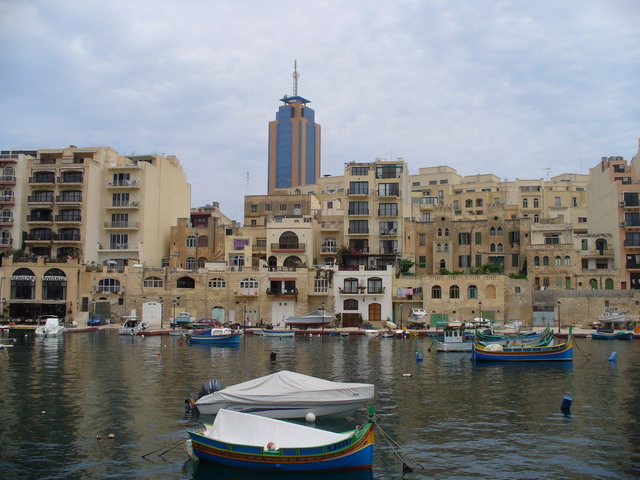
We spent the first few days in St. Julians, which is known for its lively nightlife. Bars stay open until 4:00 or 5:00 in the morning if you can stay awake that long, which is quite popular with the younger crowd.


St. Julians

After a day of wandering St. Julians and Sliema, we decided to escape the city via a sightseeing bus. If you choose to ride on the top, pay attention or you might catch a palm tree with your face. Slightly embarrassing at the time, but it provided plenty of amusement for the other riders.

The first place we stopped at was Marsaxlokk, a fishing village on the south side of Malta. The highlight of this harbour town is the brightly painted fishing boats, called luzzus. Most have a pair of eyes painted on the front to protect against evil, which probably saves them having to purchase insurance. Not surprisingly, Marsaxlokk is known for its seafood restaurants lining the harbour area. There’s also a decent souvenir market, but the tapestries we found here were three times more expensive than in other villages.


Luzzus in Marsaxlokk

Next up, we stopped at the Blue Grotto, which is a stunning section of the southern coast, popular with divers. This is a rocky section of coastline, with several caves and sparkling water in various shades of blue. It’s the perfect photo opportunity, with plenty of restaurants offering balconies and great views.

Along with our bus tour, we received a complimentary harbour cruise around Sliema’s Marsamxetto Harbour and Valletta’s Grand Harbour with Latini Cruises. The cruise took around an hour and a half, and would have been a very pleasant trip had it not been windy and raining. Freezing my ass off while wearing a plastic poncho is not my idea of fun, but the crew did their best to make the trip enjoyable, passing out blankets and making as much space behind the glass as possible. I would love to try it again on a sunnier day.


Grand Harbour, Valletta

After a few days, we moved up the coast to the much more laid-back town of Mellieha. The nightlife is quiet, intimate, and perfect for me: small pubs and bars with a mellow atmosphere. Mellieha has a nice stretch of sandy beach with sun loungers and umbrellas for rent, which made for a very relaxing afternoon.


Mellieha

For variety, we caught the bus from Mellieha to Cirkewwa, and hopped on the ferry to the northern island of Gozo.  The ferry takes about 30 minutes and lands at Mgarr. After running the gauntlet of overeager, pushy tour operators, we caught a bus to the town of Xaghra, on northern side of the island. We rambled over to Calypso’s Cave (from Homer’s Odyssey) and hiked down the hill to Ramla Beach. Ramla is covered with red sand, and was a great place to soak up some sun. There’s three beach front restaurants, offering typical snacks, pizza, and drinks.

I thought six days would be plenty of time to see all Malta had to offer, but I was wrong. I could’ve easily spent another week and not seen everything on my list. We had booked a cruise around Comino and the Blue Lagoon, which was canceled due to wind, and I also wanted to visit some of the wineries and see the glass blowers. We didn’t get a chance to see any of the ruins, and only briefly visited one church in Mellieha. I’m counting all of this as an excuse to visit again!

Taking the Bus in Malta


Vintage Maltese Bus

The old yellow bus is as iconic to Malta as cowboy hats are to Texas.  Buses may not seem all that exciting, but they have been a recognizable feature of the Maltese roadways since the Second World War. The buses were individually owned and operated, similar to a taxi. Owners took great pride in their buses; designing, customizing, and creatively naming them.

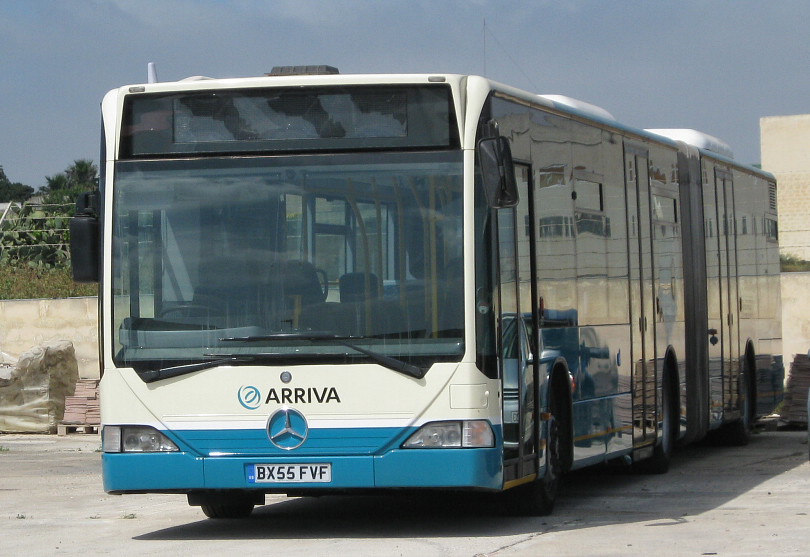
These brightly colored buses may be found on every conceivable piece of touristy kitsch, but they’re no longer struggling up Malta’s steep and winding streets. Last year, the British company Arriva modernized Malta’s public transport system, introducing a sleek new fleet of aquamarine and cream-colored coaches.
Modern Arriva Articulated Bus

Not everyone was happy about the decision, as is to be expected. However, as a recent BBC article explained: “The old buses are polluting, unreliable and uneconomic. As a result, most people drive” (Simons). The new buses may be a bit plain, but they are consistent and user-friendly.  In a country known for its hot, humid summers with temperatures that frequently top 95ยบ, the new buses also proudly offer air-conditioning.

Every driver we met was friendly and helpful. We flagged down one driver to ask if his route would take us to the top of the hill in Mellieha. It didn’t, but he happily offered to get us “pretty close” which was the best news we could’ve received after a long day. We were also interested in seeing Calypso’s Cave on the northern island of Gozo. The first driver we approached offered to take us as close as he could to the actual site (about a mile away). However, he also stopped mid-route to point out which cliff we were aiming for, since he knew we wouldn’t be able to see it from the top of the hill.

Another plus for the Maltese public transportation system is that a pass is good on every bus for the particular island you’re on at the time (Malta or Gozo).  These passes can be purchased for anywhere from 2 hours to 90 days, and are very reasonably priced.

I'm grateful that the buses were so easy to use, because there’s no way I could drive on their roads. Based on the sounds of screaming transmissions and the scent of burnt breaks, no one else can either.

A Traditional Maltese Parking Spot

The cramped, twisted streets just add to Malta’s charm. They are a continual reminder that this country has a rich history and that its cities weren’t designed with drivers in mind. With that, you may as well tip back a glass of the local wine and let a professional handle taking you home.

Simons, Jake Wallis. "Malta's colourful vintage buses bow out." BBC News 23 Jun 2011.
Follow Me on Twitter