Friday, 27 April 2012

Good luck, A!


My smart, funny, and all-around awesome sister-in-law is doing something amazing tomorrow—running her very first half marathon. Naturally, I’m ridiculously excited and proud of her. I’ve been following her progress and find her story to be an inspiration. She’s overcome more hurdles than the average person attempting this goal, and her health has improved phenomenally.

Last week, she made a point that has stayed on my mind: even though she’s done all of the work and could get up and run the distance right now, she’s freaking out about this race. Why?

She’s freaking out because it matters. If this goal wasn’t important to her, she wouldn’t be in a panic right now.  It would just be another run on her calendar. To put it plainly, this run means something to her. It represents the culmination of all of her time, effort, and training. She’s put in a lot of hard work. She’s stuck it out through knee pain, days when work and family left her short on time, and days when she just didn’t want to go. For each run, she took that vital first step that most of us find so easy to ignore. She showed up, over and over again.

Fear is technically considered a negative emotion, but negative emotions demonstrate what matters to us. Negative emotions are uncomfortable. As much as we try to avoid them (anger, fear, jealousy, etc.) these are the emotions that we need to listen to the most.

When we worry about our family members being out later than we anticipated, it shows that we care about their safety. When we get angry because our friend let us down, it shows that our relationship with them is important. When we’re jealous of someone else’s success at work, we can finally see where we want to succeed. No one wants to feel panicked, angry, or jealous, but it’s precisely in these uncomfortable situations that we understand what we truly want, and we learn where to focus our efforts.

I won’t try to tell A to stop freaking out about tomorrow. It wouldn’t do any good, and besides, she has every right to freak out! I know that she will be amazing, and in less than 24 hours she will be celebrating one of her proudest moments. The half marathon is definitely worth celebrating, but the hundreds of miles she put in to get to this point are worth even more.
 
I doubt she’ll get any sleep tonight, but as she lies awake with excitement and nervousness, I hope she can see that this one, restless night represents a year of hard work. Every panicked thought says that tomorrow is important and something worth celebrating. Just as she is important and worth celebrating to us. Good luck, A!! We’ll be here cheering you on!

Wednesday, 25 April 2012

Unquitting


I’ve been given the unique opportunity to “unquit” my job twice in last few weeks. This is a touching offer, and has done more to improve my opinion of this company than anything else. However, it has created a bit of a mental dilemma for me.

As with every major decision, I had already jumped head first into full-on panic mode. It’s not that I have a history of decisions not working out. Quite the opposite, really; which adds to my fears that I’m throwing away a good thing. This could be the moment that I look back on in 20 years and count as “the point where everything went to shit.” Whether it’s a fear of the unknown, Stockholm syndrome, or just the fact that I’m institutionalized, the thought of stepping out into the world is paralyzing. If this is the Shawshank Redemption, I am Brooks.

Although these thoughts keep me up at night, there’s something that I fear even more: still being in this career at 50. Staring dramatically into the future isn’t as crazy as it sounds; all of my coworkers started out in this career and will more than likely carry on through retirement. I can count on one hand the number of people I know who have left “the community.”

Although the offers to stay with my company have been very tempting during this tumultuous phase of questioning my decision, I’ve politely declined each time. After effectively quitting my job three times now, I feel like Peter denying Christ, but my reasons for not turning back are perfectly rational.

I want this job, but there's too many cocks.
  
1. I haven’t forgotten why I quit.

This is a big one. With both offers to stay, many of my reasons for quitting would no longer apply and I could conceivably make a decent career out of staying. However, my overall impression of this place has been irreversibly soured. Every time something goes wrong in the future, I know I will reflect back on this period. I don’t want to turn into one of those bitter, soulless people I've worked with who turn every situation into a chance to bitch about the past.

2. I’ll always be that one who ended up staying.

Quitting is one thing. Quitting and then deciding to stick around is entirely another. Even if I did decide to stay, I will be remembered as the one who wanted to leave. It’s a given that I’m not committed to the company, so why would they want to promote me or give me more responsibility? It’s not like I can fake how much I love working here. The cat’s out of the bag.

3. Good luck getting a favor.

I may as well walk into every negotiation in the future waving a massive red flag. If my company has already attempted to accommodate my requests from that time I “threatened to leave,” how likely is it that they will help me now?

4. I’m too happy.

You know that smile you get when you’re stupid happy about something? The one 15-year-old’s have when they’ve found “love” and serial killers have when they give interviews to MSNBC? That’s the one. It’s a little creepy, but completely authentic.

Exactly.

I’ve been walking around with this big, dippy grin since I gave my notice, in a haze of euphoria and relief. I’m swimming in unadulterated joy.  I want to hug strangers and skip through the streets. I’m annoying as all hell on a Monday morning, which is just more reason to smile. So as much as I love stability, I’m going to keep chasing this high a little longer.

Malta's History


Malta’s history has enough to keep a person occupied for weeks. Although my reasons for this trip centered on getting some sun and getting the hell out of England for a week, I would love to go back to visit some of the more cultural sites. I couldn’t begin to describe the history of this tiny nation in one article, so instead I’ll quickly gloss over some of the highlights to explain why I need to go back.

For starters, Malta is a Roman Catholic nation, a fact that is typically attributed to St. Paul’s shipwreck on the island in the first century.

All things considered, it's not the worst place to shipwreck

Most statistics list the population as being over 95% Catholic, and churches dominate the landscape. There are 365 churches on the island, with the standing joke being that there’s one for each day of the year.

Another fun fact is that many churches have two clocks on their towers. Only one of the clocks shows the correct time. Superstition holds that two clocks would confuse the devil, and he would never know what time Mass was performed. By all accounts, this was an effective ploy. However, he succeeded in getting divorce legalized last year, so perhaps they should have put the clocks outside Parliament instead.

Churches, like most of the buildings on Malta, are made primarily of limestone. For centuries limestone was the only building material available, but it remains the most popular choice today. It’s durable, cuts easily, and helps maintain comfortable household temperatures all year long. If you’re really excited about limestone, you can even visit the Limestone Heritage Museum in Siggiewi. Although I can’t say I find it all that thrilling, I will say that the contrast of white limestone with dark rocky beaches and cactus lined streets is gorgeous in the sun.

The arrival of the Knights of St. John furthered Catholicism on Malta. The island’s strategic location allowed the Knights to maintain and protect the crusader territory while amassing their wealth. They were led by a Grand Master, who reported to the Pope. When referring to historical events, most tours will reference who the Grand Master was at the time, similar to England mentioning who was King or Queen or the States referencing a presidency. 

Before they excelled in military conquests, the Knights were an order devoted to medical services in Jerusalem. In 1643, Grand Master Jean Paul Lascaris continued this tradition by building the Lazaretto, or quarantine hospital, on Manoel Island to protect the population against plague and cholera.

The Lazaretto

For over 250 years, every visitor passed through this hospital before entering the country. Some famous visitors include Sir Walter Scott, Lord Byron, and Cardinal Newman. The Lazaretto was damaged during World War II and fell into disrepair, but is now being restored.

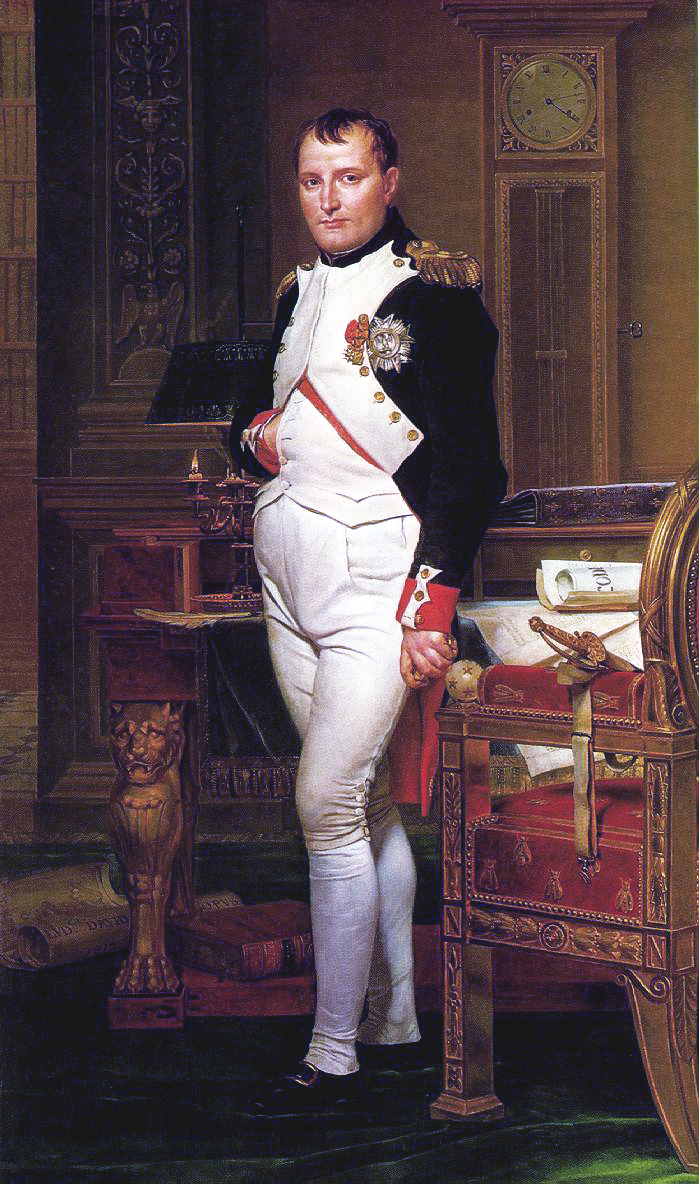
The island of Malta benefitted from the Knights’ protection for over 200 years, until corruption turned the local public against them. Napoleon’s arrival in 1798 signaled the end of the Knights’ Maltese history.

He looks trustworthy...

The French occupation of Malta only lasted two years, until the British arrived to save them. It didn’t take long for Britain to notice the quality of Malta’s harbors, so they decided to “save” them for the next 164 years. The island became a pivotal location for the British naval fleet, and became even more beneficial after the Suez Canal opened in 1869.

Malta gained its independence from Britain and is now part of the European Union. They recently switched to the euro, and the “One Lira Store” now sells everything for two euro. The island continues to be a useful seaport, and just last summer thousands of evacuees fled Libya to find a safe haven on Malta’s shores. Everything from cruise ships to fishing vessels have a place to dock in Malta’s extensive harbor system. It seems that no matter where you stand in Malta, you can see either a boat or a church, usually at the same time. So if lounging on the beach isn’t your style, there’s plenty of history to keep you occupied.
Follow Me on Twitter